
A specialized course in which participants:
 ● delve into parametric modeling of units;
● learn to create and organize nested families;
● master working with geometry, formulas, parameters, and visibility;
● learn to specify facade elements and prepare working documentation.
This course is ideal for architects and engineers working with facade solutions (modular systems).
A course designed specifically for engineers specializing in heating, ventilation, air conditioning, and plumbing systems.
Over the course of 16 hands-on lessons, participants will learn:
● to design HVAC and plumbing systems in Revit;
● to create accurate plans and specifications;
● to prepare comprehensive documentation;
● to model heating, ventilation, plumbing, and sprinkler systems.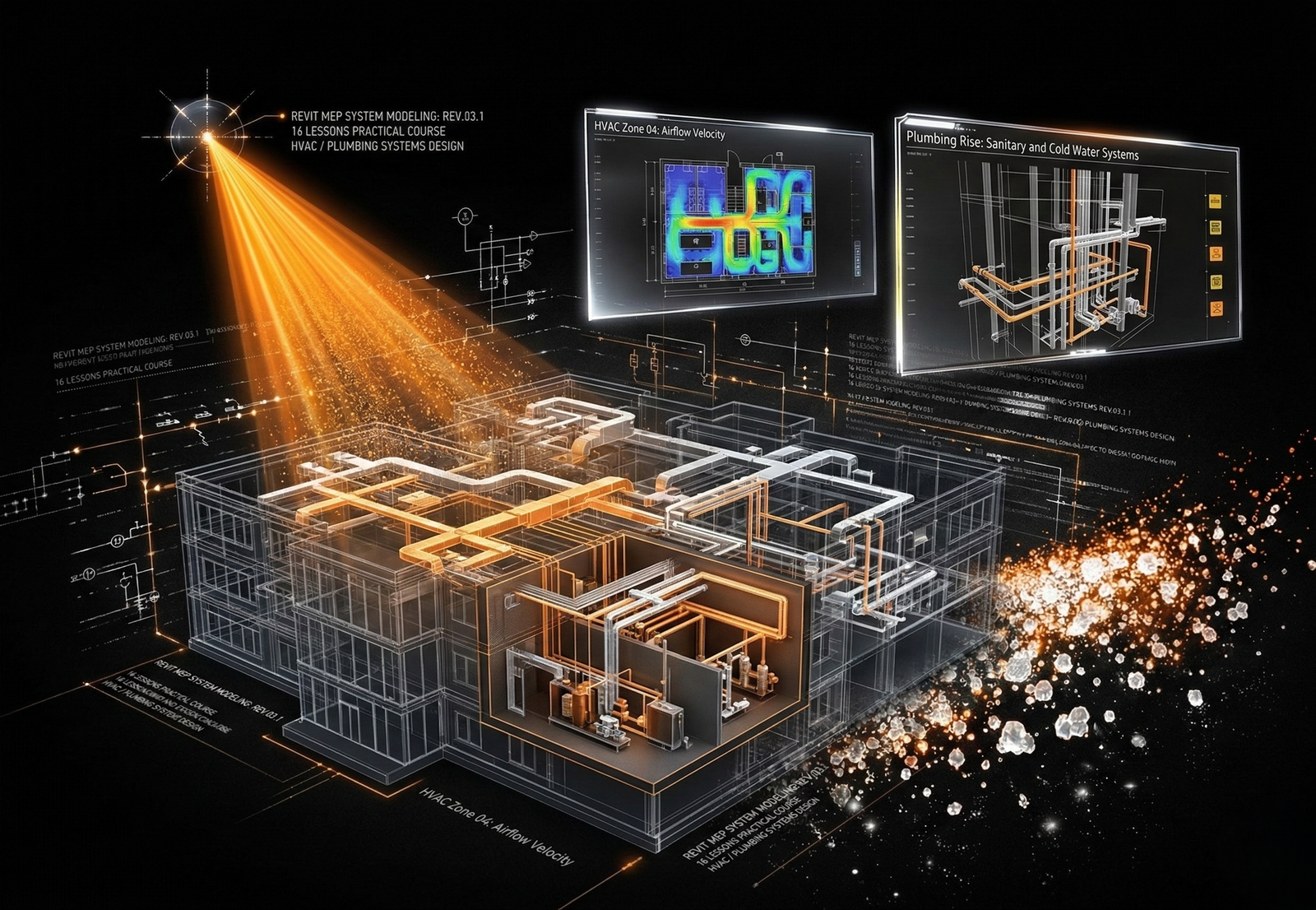
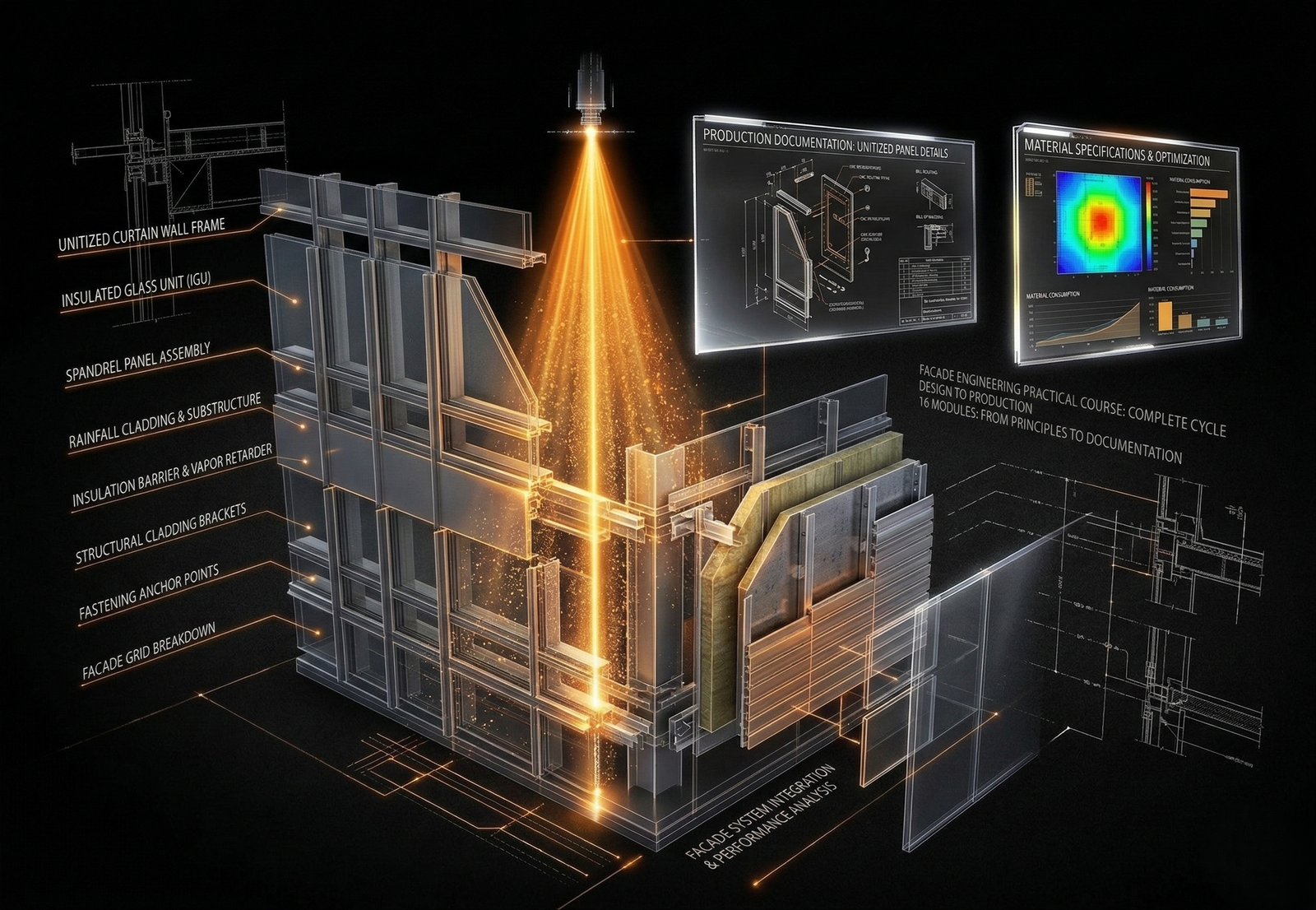
This is a practical course for engineers that covers the entire process of working with facades: from basic principles and terminology to the preparation of
working documentation and production data.
During the training, participants:
● study types of facade systems, subsystem materials, and cladding;
● examine insulation, joints, fasteners, and structural solutions;
● learn to create facade elevations, work with layout plans, and build frameworks;
● master specifications, material take-offs, and calculation optimization;
● prepare data for the production and cutting of facade elements.
As a result, participants gain practical experience working with a real-world project, an understanding of the logic behind design solutions and the interrelationship between structural design,
materials, and installation technology, as well as the readiness to immediately join active projects upon completing the course.
An in-depth, hands-on course for engineers covering the entire cycle of design, development, and preparation of manufacturing documentation for stained-glass and
aluminum curtain wall systems.
As part of the course, participants:
● learn the basics of architectural geometry and how to work with drawings;
● examine the types of SPOK and stained-glass systems, their structural solutions, and areas of application;
● work with system components: mullions, transoms, fasteners, infills, and connection joints;
● master load-bearing, deformation, sealing, and thermal and sound insulation;
● follow the process from architectural design to installation and production;
● create a complete set of production drawings with calculations, specifications, and order details.
The course is based on a real-world project and is as close as possible to actual production processes. As a result, participants gain practical experience in creating comprehensive production documentation, an understanding of the basic principles of working with aluminum stained-glass systems, and the readiness to immediately work on real orders.
The perfect course for beginners and those who work with facade systems.

Over the course of 10 lessons, participants will:
● gain solid skills in basic modeling;
● learn to manage a project from start to finish, including final documentation;
● master working with aluminum structures and BIM processes.
After completing the course, they will be able not only to model but also to collaborate professionally as part of a team, preparing high-quality project materials.
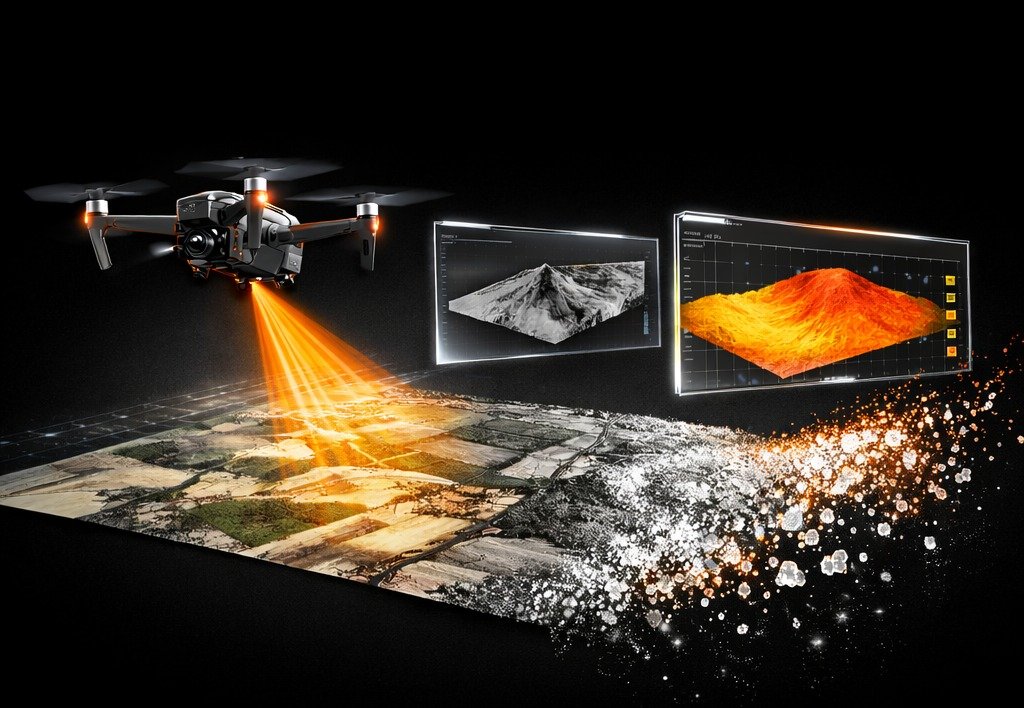
This is a hands-on training course that introduces the basic principles of photogrammetry and teaches participants how to work with geodata collected from drones. Special attention is given to processing point clouds in AutoCAD Civil 3D—one of the key tools for today’s engineers.
During the course, participants go through the entire process: from importing aerial photographs to creating orthophotos, digital elevation models (DEM/DTM), and performing engineering work with point clouds in Civil 3D.
Tools used: Pix4D, CloudCompare, ReCAP, QGIS, AutoCAD Civil 3D (primary processing tool)
This course is designed to introduce you to the basics of AutoCAD—one of the most popular programs for 2D and 3D drafting.
This course will help you master the basic skills needed to create technical drawings, diagrams, plans, and simple 3D models. Particular emphasis is placed on practical exercises that allow you to reinforce what you’ve learned through real-world examples.
The program is designed for those with no prior experience in AutoCAD and will serve as a good starting point for further study of the software.