
Revit 2027: what’s really changing — summary of our webinar
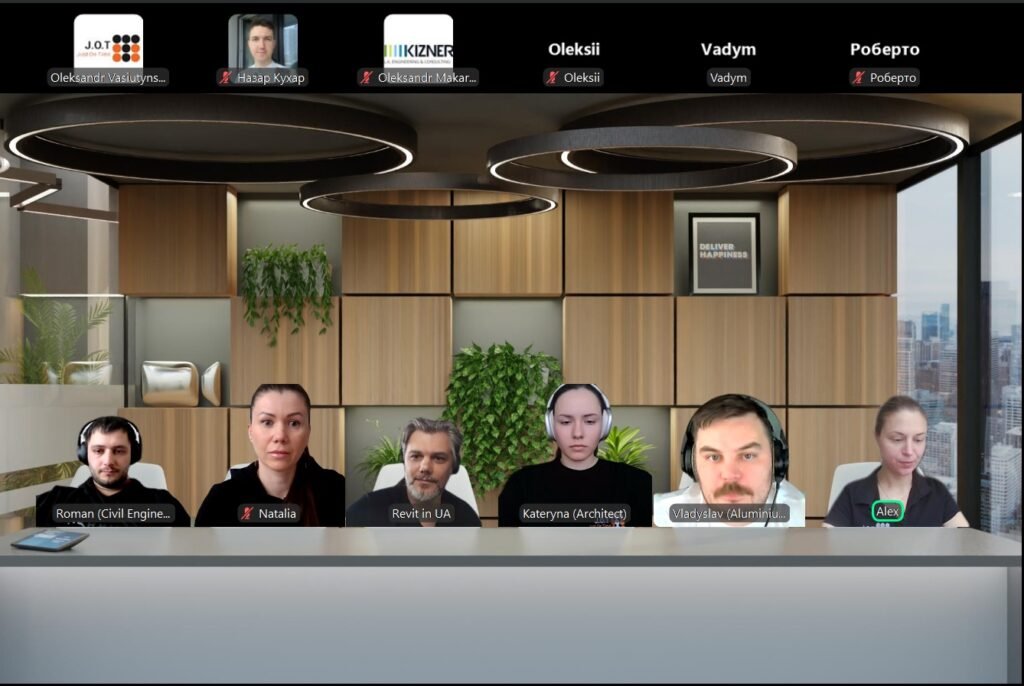
Yesterday, we held an open professional webinar dedicated to the updates in Autodesk Revit 2027.
Together with BIM Partner and on the initiative of Dmytro Makarov, we brought together engineers and industry professionals to explore the new version of Revit not as a list of features, but as a tool for real-world work.
It was a conversation between practitioners — about what truly matters in projects.
Who Shared Their Expertise
The webinar featured professionals who work with Revit on a daily basis:
- Vladyslav — Aluminum Engineer (facade systems and structures)
- Kateryna — Architect (architectural design)
- Roman — Civil Engineer (infrastructure engineering)
Each of them presented the updates through the lens of their specialization — from architecture to infrastructure.
What’s Actually New
We focused not on the number of changes, but on their real impact.
Architecture
Revit gains more automation:
- hosted walls
- rule-based numbering
- improved annotations
- design options management
👉 Less manual work — more controlled results.
Structural
A strong focus on analytics and detailing:
- analytical model
- reinforcement of complex elements
- steel support at LOD 350
👉 The model becomes closer to real construction.
Issues Directly in Revit
One of the most practical updates — integrated Issues.
👉 Task and issue management is now possible without third-party tools.
Model Analytics
A new level of model control:
- synchronization speed
- file size
- performance
👉 What used to be intuitive can now be measured.
Integration with Forma
Revit is gradually becoming part of a unified ecosystem — from concept to detailed design within a single environment.
Carbon Insights
Carbon footprint assessment at early project stages.
👉 This is no longer a trend — it’s a market requirement.
Autodesk Assistant
AI is gradually becoming part of everyday workflows:
- today — as an assistant
- tomorrow — as a full-fledged productivity tool
Our Conclusion
Revit 2027 is not just an update.
It’s a move towards:
- integrated processes
- transparent analytics
- automation of routine tasks
Most importantly, it’s about the speed and quality of team performance.
Thank You for Participating
Thank you to everyone who joined the webinar.
We will continue sharing practical BIM experience and real project case studies.
Stay tuned for updates from Jot Solutions — there’s much more to come.