
How to Start From Scratch in Engineering in 2026
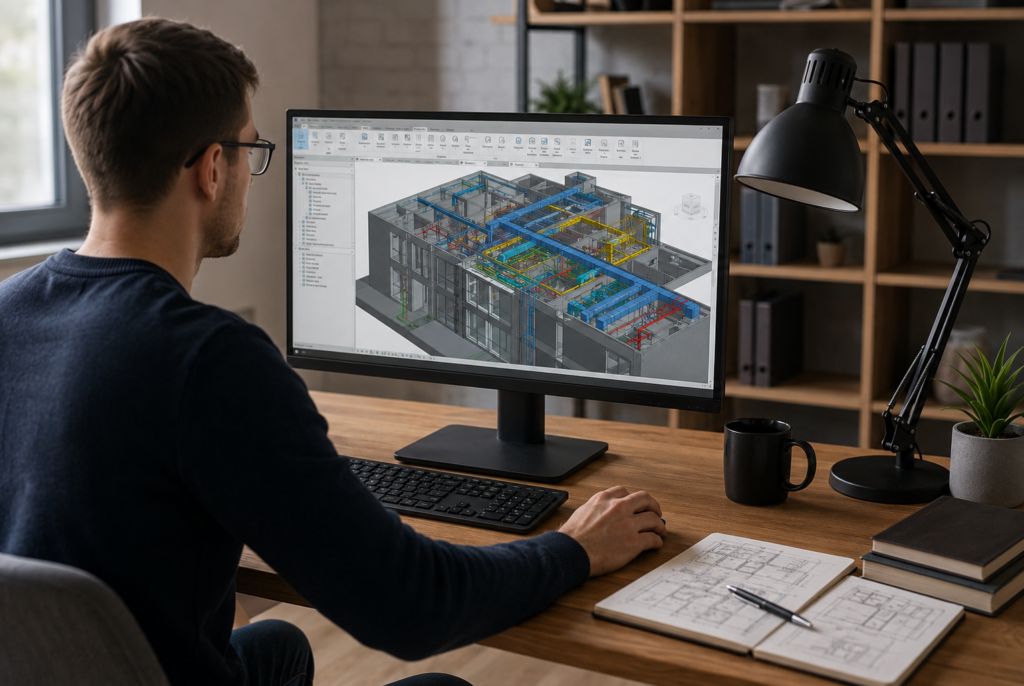
Many people delay starting a career because they lack experience. But the reality in 2026 is different: you can learn engineering faster if you move in a structured way.
Here’s a practical plan for entering the profession:
1. Choose a direction
Engineering is a broad field. It’s important to decide early:
- HVAC (heating, ventilation, air conditioning)
- Plumbing (water supply and drainage)
- Structures
- Architecture / facades
👉 Don’t try to cover everything — narrow specialization leads to faster results.
2. Master a core tool
Start with key software.
For most fields, the standard is Autodesk Revit.
What you need at the beginning:
- basic modeling
- working with families
- creating simple systems
- understanding model structure
👉 Important: don’t just “watch videos” — practice immediately.
3. Learn through practice, not theory
The fastest path is:
- working on real tasks
- repeating case studies
- doing assignments
80% practice = fast progress.
4. Build your first portfolio
Even without experience, you can show results:
- system models
- drawings
- small projects
👉 Employers look not at your diploma, but at what you can actually do.
5. Learn to communicate like an engineer
It’s important to be able to:
- explain your decisions
- ask the right questions
- work with feedback
Even basic English is already a competitive advantage.
6. Find a growth-oriented environment
Doing it alone takes longer.
It’s faster if you have:
- a mentor
- a team
- feedback
👉 The environment shapes the level of a specialist.
7. Start with simple tasks or an internship
The first step is not a perfect job, but experience.
This can be:
- an internship
- supporting tasks
- simple projects
The key is to start working on real tasks.
Important to understand
Starting from zero is realistic.
But the key difference between those who enter the profession and those who don’t is not talent — it’s consistency of action.
We help make this path shorter
In our training programs:
- clear learning structure
- practice on real projects
- support from practicing engineers
- preparation for teamwork
👉 This allows you to move from “I don’t know where to start” to your first real project much faster.